A straight and healthy smile can improve both your appearance and oral health. If you’re considering orthodontic treatment, one of the most common questions is whether to choose clear aligners or traditional braces. Both treatments are designed to correct teeth alignment issues, but they differ in appearance, comfort, maintenance, and lifestyle impact.
Understanding the differences between these options can help you make an informed decision based on your dental needs and personal preferences.
What Are Clear Aligners?
Clear aligners are transparent, removable trays that gradually move teeth into their desired position. They are custom-made for each patient and are replaced periodically as treatment progresses.
Because aligners are nearly invisible, they have become a popular choice among adults and teenagers looking for a discreet teeth straightening solution.
Benefits of Clear Aligners
- Virtually invisible appearance
- Removable while eating and drinking
- Comfortable with no metal wires or brackets
- Easier brushing and flossing
- Fewer dental visits in many cases
- Minimal impact on daily activities
What Are Traditional Braces?
Traditional braces use metal brackets and wires attached to the teeth to gradually shift them into alignment. Braces have been used for decades and remain a highly effective orthodontic treatment option.
Modern braces are more comfortable than older designs and can successfully treat a wide range of alignment and bite issues.
Benefits of Traditional Braces
- Effective for simple and complex orthodontic cases
- Fixed appliance that does not require patient removal
- Suitable for severe bite corrections
- Proven long-term treatment results
- Consistent force application throughout treatment
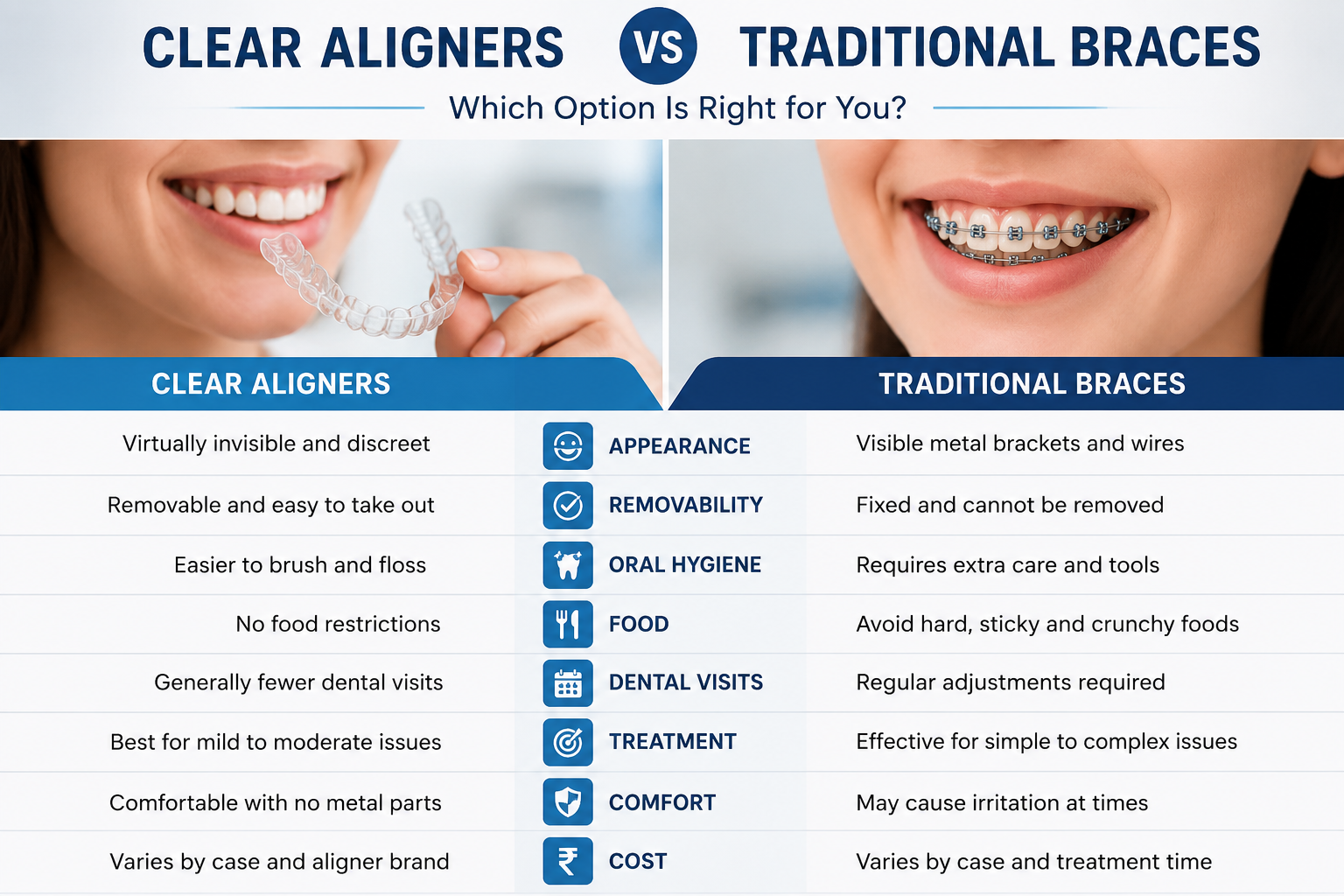
Clear Aligners vs Traditional Braces: Key Differences
Appearance
Clear aligners are nearly invisible, making them ideal for patients concerned about aesthetics. Traditional braces are more noticeable because of the visible brackets and wires.
Comfort
Aligners are generally considered more comfortable since they do not contain sharp wires or brackets that may irritate the cheeks and gums.
Oral Hygiene
Because aligners are removable, brushing and flossing remain relatively easy. Braces require additional care to clean around brackets and wires effectively.
Food Restrictions
Patients using clear aligners can remove them while eating and enjoy most foods. Braces often require avoiding sticky, hard, or crunchy foods that may damage the appliance.
Treatment Complexity
While aligners can successfully treat many alignment issues, traditional braces may still be recommended for certain complex orthodontic cases.
Which Treatment Works Faster?
Treatment duration varies depending on the severity of the alignment problem and patient compliance.
For mild to moderate cases, clear aligners may offer treatment timelines similar to traditional braces. More complex cases sometimes benefit from braces due to their ability to provide continuous force and precise control.
The best approach is to undergo a professional orthodontic evaluation to determine the most suitable treatment option.
Cost Comparison: Aligners vs Braces
The cost of treatment depends on several factors, including:
- Complexity of the case
- Treatment duration
- Type of aligner or braces selected
- Additional procedures required
While clear aligners may have a higher initial cost in some situations, many patients consider the convenience and aesthetic advantages worthwhile.
Who Is a Good Candidate for Clear Aligners?
You may be a suitable candidate for clear aligners if you have:
- Mild to moderate crowding
- Gaps between teeth
- Minor bite irregularities
- Crooked teeth
- Previous orthodontic relapse
- A preference for discreet treatment
A consultation with an experienced aligner dentist can determine whether clear aligners are appropriate for your specific case.
Who Should Consider Traditional Braces?
Traditional braces may be recommended for:
- Severe crowding
- Significant bite correction
- Complex tooth movement requirements
- Cases where consistent appliance wear may be challenging
Braces continue to be a reliable solution for many orthodontic problems.
How to Choose the Right Option
The decision between clear aligners and traditional braces depends on your:
- Alignment concerns
- Lifestyle preferences
- Budget
- Treatment goals
- Dentist’s recommendation
A detailed examination and treatment planning session can help identify the most effective solution for achieving a healthier and straighter smile.
Conclusion
Both clear aligners and traditional braces are effective methods for correcting teeth alignment issues. Clear aligners offer a discreet and convenient treatment experience, while traditional braces remain highly effective for complex orthodontic corrections.
Choosing the right treatment requires professional guidance and a personalized assessment. Consulting an experienced dental professional Navneesh Dental Clinic the best Dental aligners in safdarjung can help you understand your options and select the treatment that best matches your smile goals.
Frequently Asked Questions
Are clear aligners as effective as braces?
For many mild to moderate alignment issues, clear aligners can be just as effective as traditional braces.
Can adults use clear aligners?
Yes. Clear aligners are a popular orthodontic treatment option for adults seeking a discreet way to straighten teeth.
Do clear aligners hurt?
Patients may experience mild pressure when switching to a new set of aligners, but discomfort is generally temporary.
How many hours should aligners be worn daily?
Most aligner systems require wear for approximately 20–22 hours per day.
Can aligners fix gaps between teeth?
Yes. Clear aligners are commonly used to close spaces and improve overall tooth alignment.