Dental Implant Failure: Signs, Causes and What You Can Do
Most dental implants do their job quietly for years. But now and then one gives trouble, either during the first weeks of healing or long after you’ve stopped thinking about it. If your implant hurts, bleeds when you brush, or feels like it’s moving, don’t wait and hope it settles. Problems caught early are usually simpler to fix.
What Is Dental Implant Failure?
An implant is a small post placed in the jawbone to hold a replacement tooth. It only works if the bone grows around the post and grips it firmly. When that doesn’t happen, or when the bone around a working implant starts breaking down later because of infection or heavy biting force, the implant is considered to have failed.
One thing to sort out first: a loose crown is not the same as a loose implant. Often it’s just the crown, or the tiny screw that holds it, and that is a much smaller repair. Only an examination, usually with an X-ray, can tell you which one you’re dealing with.
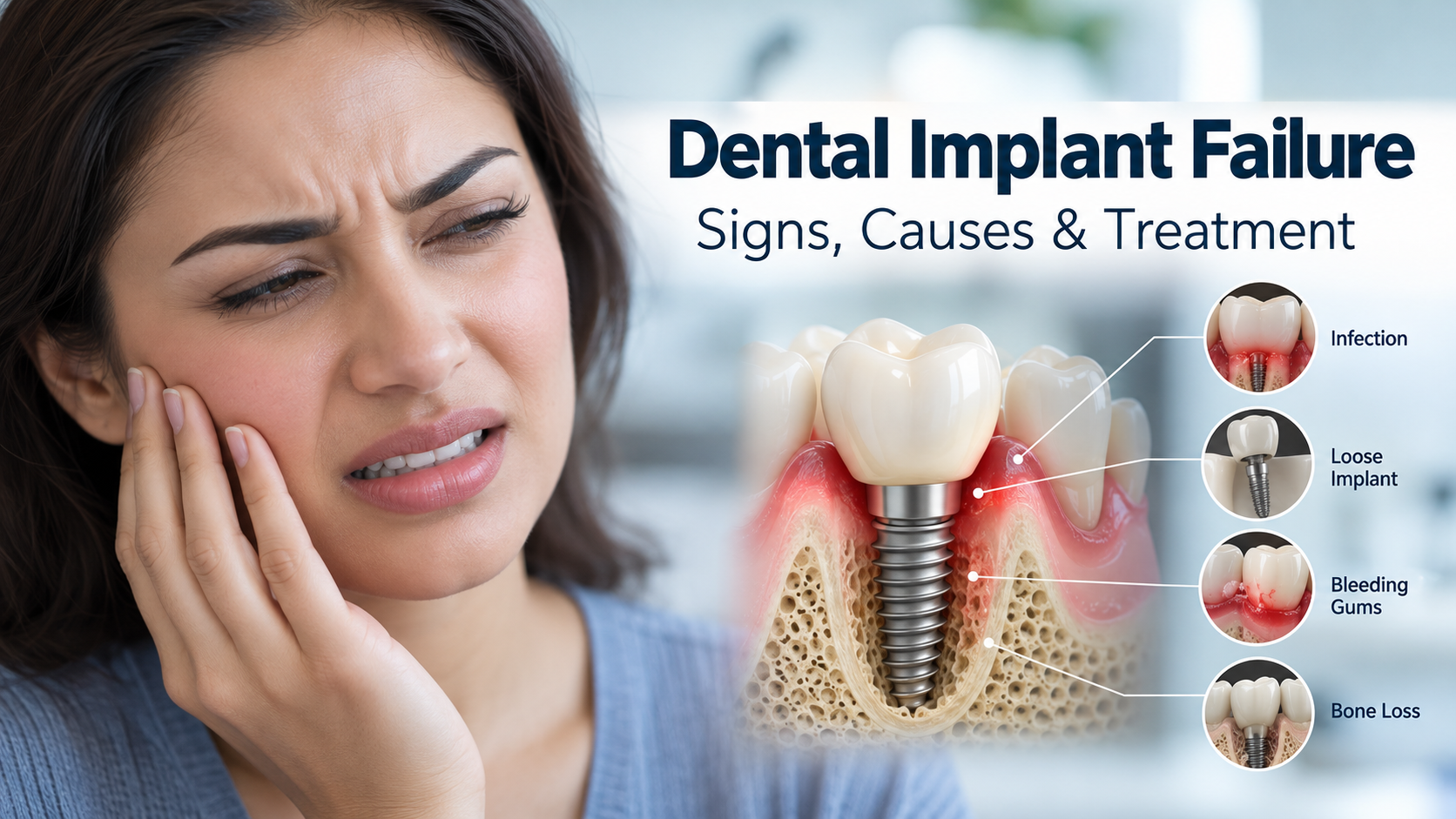
Signs and Symptoms of Dental Implant Failure
Some implant problems announce themselves with pain. Others creep up slowly, so it helps to know what to look for.
Pain that doesn’t settle
A few days of soreness after surgery is normal. Pain that drags on, gets worse, or comes back months after the implant had healed is not, and it’s worth getting checked.
Movement
A healthy implant doesn’t move. If the post itself shifts when you press on it, the bone holding it may be weak. If only the crown wobbles, the fix may be a lot easier.
Red, puffy or bleeding gums
Gums that bleed when you brush, or feel tender and swollen around the implant, are usually inflamed. Left alone, that inflammation can spread to the bone underneath.
Pus, bad taste or persistent bad breath
Any of these around an implant can point to infection, especially if you also have pain or swelling. Don’t put this one off.
Chewing feels different
If biting suddenly hurts, or the tooth feels “off” when your jaws close, the bite may be putting too much load on the implant. Your dentist can check and adjust it.
Get urgent care if you have severe swelling, fever, pain that is getting worse quickly, or any difficulty swallowing or breathing.
What Causes Dental Implant Failure?
It’s rarely just one thing. These are the usual suspects:
- The bone doesn’t bond properly. The implant never becomes firmly anchored.
- Infection. Bacteria around the implant inflame the gum and can damage the bone.
- Not enough bone. The quantity and quality of the jawbone affect how stable the implant can be.
- Smoking. It slows healing and raises the risk of complications.
- Medical conditions. Poorly controlled diabetes, for example, can interfere with recovery.
- Grinding or clenching. Constant pressure, often at night, strains both the implant and the crown.
- Plaque buildup. Poor cleaning around the implant can lead to peri-implantitis, an infection that eats into the supporting bone.
Treatment depends on working out which of these is actually behind the problem.
Can a Failed Dental Implant Be Saved?
Sometimes, yes. Not every complication means the implant has to come out.
If the issue is only the crown or the connecting screw, repairing or replacing that part may be enough. If the gum and bone around the implant are inflamed, professional cleaning and other measures can often bring things under control, though more advanced cases may need surgery. But if the implant has become unstable or lost a lot of its bone support, removal may be the only sensible option. Your dentist will look at the implant, the gums and the bone before suggesting a plan.
What If the Implant Needs to Be Replaced?
If an implant can’t be saved, it will need to be removed. What comes next depends on how the area looks and why the implant failed in the first place.
Some people can have a new implant after the area heals. Others need bone grafting first. A dental bridge or a removable partial denture is another route. A failed implant doesn’t rule out trying again, but the original cause has to be dealt with first, otherwise the same thing can happen twice.
Tooth Implant Cost in Delhi: What Affects the Price?
There’s no single number for tooth implant cost in Delhi, because no two mouths need the same work. The price moves with the implant system used, how many teeth are missing, the type of crown, and the condition of your jawbone.
Extra procedures such as bone grafting add to the total. And if you’re dealing with a failed implant, the bill may also include treating infection, removing the old implant and preparing the area for the next one.
Whichever clinic you go to, ask for a written breakdown of what’s recommended and what each part costs. It’s the easiest way to avoid surprises halfway through treatment.
Choosing Dental Implants in South Delhi
If you’re comparing options for dental implants in South Delhi, try not to decide on price alone. A good clinic will start with your oral health, medical history, bite and the bone available, before talking about the implant itself.
Ask what the procedure involves, what the risks are, and whether there are alternatives that might suit you better. Ask about follow-up visits and how you’ll need to clean around the implant at home. If a clinic can’t explain these clearly, that tells you something.
And if you already have an implant that feels loose or painful, get it examined first, before anyone talks about replacing it.
How Can You Reduce the Risk of Implant Failure?
Most of it comes down to ordinary habits done consistently:
- Brush twice a day and clean carefully around the implant.
- Go for regular check-ups, even when nothing hurts.
- Quit smoking, or at least cut down while you heal.
- Keep conditions like diabetes under control.
- If you grind your teeth, ask about a night guard.
- Don’t sit on bleeding, swelling, pain or movement. Get it looked at.
An implant needs looking after just like a natural tooth does. Regular reviews let your dentist spot gum or bone changes before you feel anything.
Frequently Asked Questions
Can a dental implant fail after several years?
Yes. Infection, bone loss and heavy biting forces can cause trouble long after the implant was placed.
Does a loose crown mean the implant has failed?
Not necessarily. The crown or its screw can come loose while the implant underneath stays firm. An examination will show which it is.
Can a failed dental implant be replaced?
Often it can, depending on how much bone is left, how healthy the gums are and why the first one failed. Some people need extra treatment first.
Conclusion
Implant problems are worrying, but they don’t always end in removal. If you notice pain, swelling, bleeding, discharge or movement, have it checked so the actual cause can be found.
Whether you’re comparing the tooth implant cost in Delhi or looking at dental implants in South Delhi, what matters most is a clear explanation of your options and of the care you’ll need afterwards. If you’re concerned about an existing implant or planning to replace a missing tooth, contact Navneesh Dental Clinic to book a consultation.