Missing teeth can affect much more than just your smile. They can impact your ability to chew, speak clearly, maintain proper oral health, and even influence your confidence. While there are several tooth replacement options available, dental implants are widely considered one of the most effective and long-lasting solutions.
Many people delay treatment because they are unsure whether they are suitable candidates for dental implants. If you are experiencing any of the signs below, it may be time to consult an implant dentist.
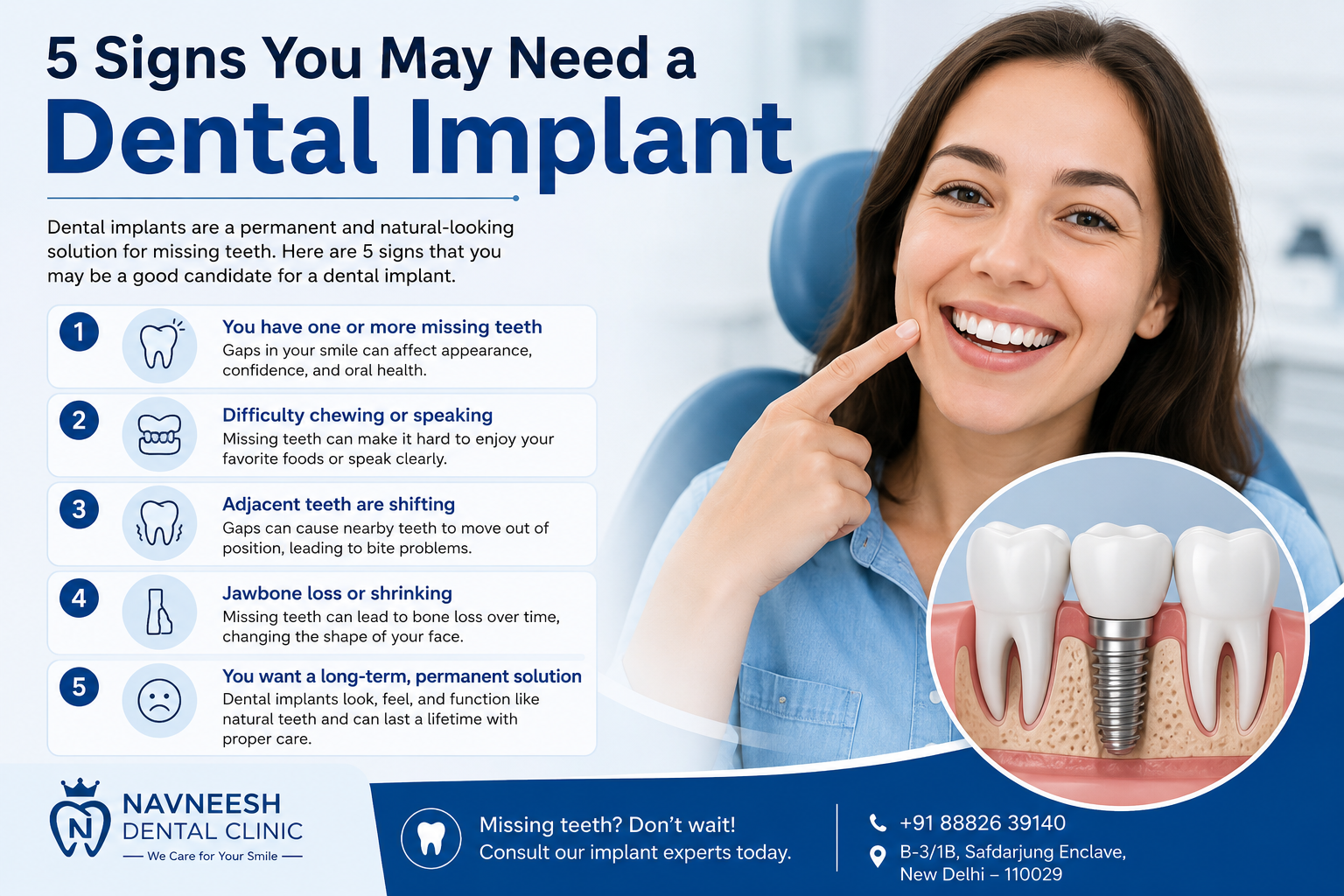
1. You Have One or More Missing Teeth
The most obvious sign that you may need a dental implant is the loss of one or more teeth.
Whether a tooth was lost due to injury, severe decay, gum disease, or extraction, leaving the gap untreated can create additional oral health problems over time. Missing teeth can affect your smile, chewing ability, and overall dental function.
Dental implants replace missing teeth with a permanent solution that closely resembles natural teeth in appearance and function.
2. You Find It Difficult to Chew Certain Foods
Do you avoid hard, crunchy, or chewy foods because of a missing tooth?
When teeth are missing, chewing efficiency decreases, making it difficult to enjoy certain foods comfortably. This can affect your diet and overall nutrition.
Dental implants restore bite strength and allow patients to eat a wider variety of foods with confidence.
3. Your Nearby Teeth Are Shifting
When a tooth is lost, the surrounding teeth may gradually move into the empty space.
This shifting can lead to:
- Bite problems
- Crooked teeth
- Increased plaque accumulation
- Difficulty cleaning between teeth
- Changes in smile appearance
Dental implants help preserve proper tooth alignment by filling the gap and preventing neighboring teeth from drifting out of position.
4. You Notice Changes in Your Jawline or Facial Structure
Many people are unaware that tooth loss can lead to jawbone deterioration.
Natural tooth roots stimulate the jawbone whenever you chew. Once a tooth is lost, that stimulation disappears, causing the bone in that area to gradually shrink.
Over time, bone loss can result in:
- A sunken facial appearance
- Premature aging
- Reduced facial support
- Changes in jaw structure
Dental implants act like artificial tooth roots and help maintain bone density, supporting long-term oral health.
5. You Want a Long-Term Tooth Replacement Solution
Temporary tooth replacement options may require periodic adjustments or replacements.
Dental implants are designed to provide a durable and long-lasting solution. With proper oral hygiene and regular dental checkups, implants can function successfully for many years.
Patients often choose dental implants because they:
- Look like natural teeth
- Feel comfortable and secure
- Improve chewing efficiency
- Enhance smile aesthetics
- Support jawbone health
- Offer long-term value
Are You a Candidate for Dental Implants?
You may be a suitable candidate for dental implant treatment if you:
- Have one or more missing teeth
- Maintain good oral hygiene
- Have healthy gums
- Possess adequate jawbone support
- Are looking for a permanent tooth replacement option
A dental consultation and clinical evaluation can determine whether implant treatment is right for your needs.
Final Thoughts
Missing teeth should not be ignored. Beyond affecting your appearance, they can contribute to bite problems, bone loss, and reduced oral function over time.
If you recognize any of these five signs, consider speaking with an experienced implant dentist. Early evaluation can help you explore suitable treatment options and prevent future complications.
Dental implants continue to be one of the most reliable solutions for restoring missing teeth, improving oral health, and helping patients regain confidence in their smiles.