One of the most common questions patients ask before replacing a missing tooth is, “Are dental implants painful?” The simple answer is no—most patients experience minimal discomfort during the procedure because it is performed under local anaesthesia. In fact, many people report that getting a dental implant is less uncomfortable than having a tooth extracted.
Modern dental implant procedures use advanced technology, precise planning, and effective pain management techniques to make the treatment safe and comfortable. Understanding what happens before, during, and after the procedure can help reduce anxiety and prepare you for a smooth recovery.
Is Dental Implant Surgery Painful?
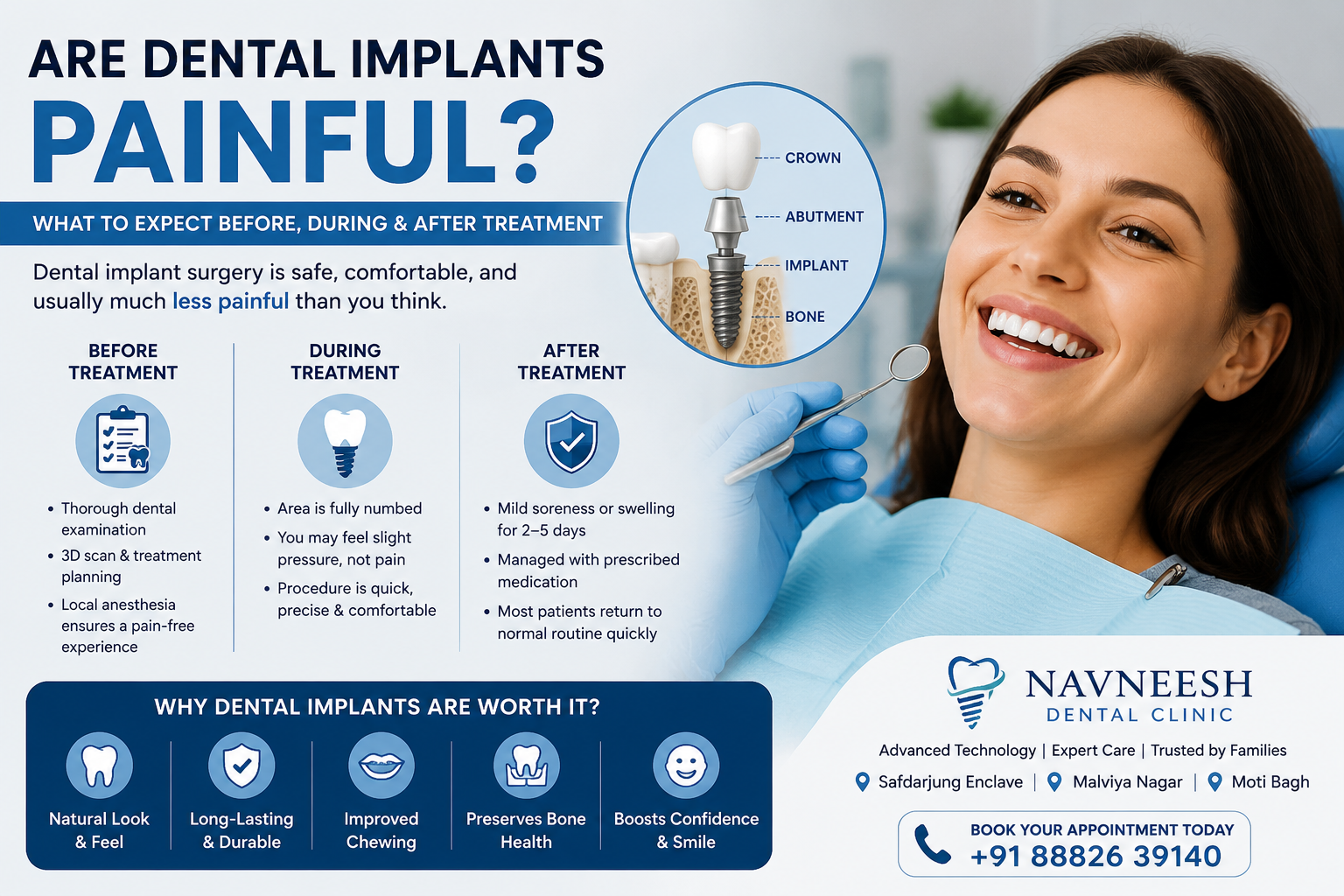
Dental implant surgery is performed using local anaesthesia, which completely numbs the treatment area. You should not feel pain during the procedure, although you may notice slight pressure or vibration.
For patients with dental anxiety, additional sedation options may also be available depending on the complexity of the treatment.
Most implant surgeries are completed comfortably, allowing patients to return home the same day.
What Happens During the Dental Implant Procedure?
The dental implant process generally involves the following steps:
Comprehensive Examination
Your dentist evaluates your oral health using digital X-rays or CBCT scans to determine whether you are a suitable candidate for implants.
Local Anesthesia
The implant site is completely numbed before the procedure begins.
Implant Placement
A small titanium implant is carefully placed into the jawbone where the missing tooth once existed.
Healing Period
Over the next few months, the implant naturally fuses with the jawbone through a process called osseointegration.
Crown Placement
Once healing is complete, a custom-made dental crown is attached to restore your smile and chewing function.
What Will You Feel After Dental Implant Surgery?
Once the anesthesia wears off, it is normal to experience mild symptoms such as:
- Slight swelling around the gums
- Mild soreness
- Minor bruising
- Tenderness while chewing
- Mild bleeding during the first 24 hours
These symptoms are temporary and usually improve within a few days.
How Long Does the Pain Last?
Most patients experience mild discomfort for only 2–5 days after surgery.
Healing varies depending on:
- Number of implants placed
- Bone grafting (if required)
- Individual healing ability
- Following post-operative instructions
Complete healing of the implant with the jawbone generally takes 3–6 months, but this healing is usually painless.
Tips to Reduce Discomfort After Dental Implant Surgery
You can make recovery more comfortable by following these recommendations:
- Take prescribed medications as directed.
- Apply an ice pack during the first 24 hours.
- Eat soft foods for a few days.
- Avoid smoking and alcohol.
- Maintain good oral hygiene.
- Avoid chewing directly on the implant site until advised.
Proper aftercare significantly improves healing and reduces complications.
When Should You Contact Your Dentist?
While mild discomfort is expected, contact your dentist immediately if you experience:
- Severe or increasing pain after several days
- Excessive swelling
- Persistent bleeding
- Fever
- Pus or signs of infection
- Loose implant
Early treatment can prevent complications and ensure successful healing.
Who Is a Good Candidate for Dental Implants?
Dental implants are suitable for most adults who have:
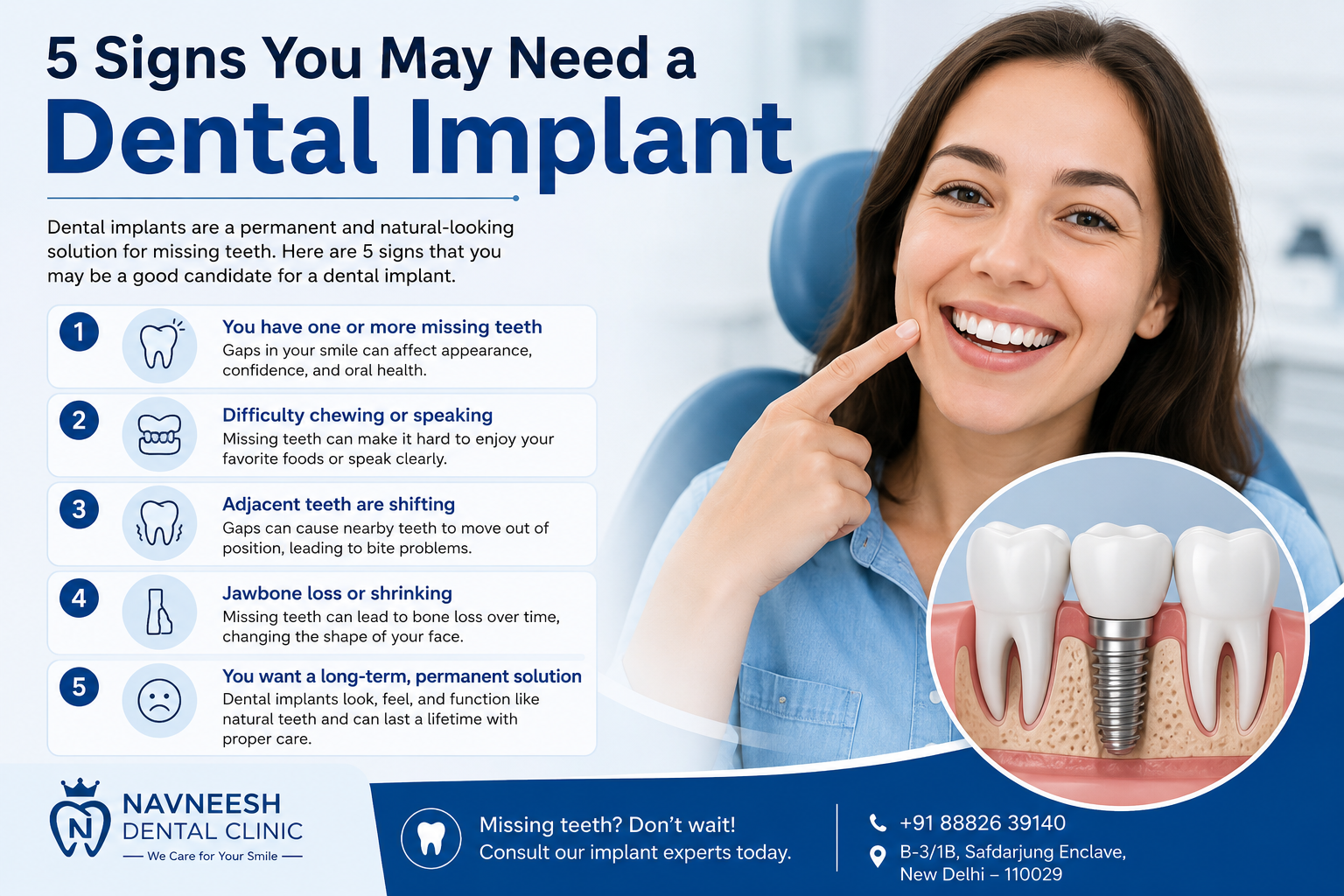
- One or more missing teeth
- Healthy gums
- Adequate jawbone
- Good overall health
- Commitment to maintaining oral hygiene
Even patients with bone loss may still qualify after bone grafting.
Why Choose Navneesh Dental Clinic for Dental Implants?
At Navneesh Dental Clinic, we use advanced diagnostic technology and personalized treatment planning to ensure every implant procedure is accurate, comfortable, and long-lasting.
Our experienced implant dentists focus on:
- Advanced digital diagnostics
- High-quality implant materials
- Personalized treatment planning
- Strict sterilization protocols
- Comfortable patient care
- Long-term follow-up support
Whether you need a single implant or multiple teeth replacement, our team is committed to restoring your smile with safe and predictable results.
Conclusion
Dental implant treatment is far less painful than many people expect. Thanks to modern anesthesia, digital planning, and minimally invasive techniques, most patients experience only mild discomfort during recovery. If you have missing teeth and are considering implants, consulting an experienced implant dentist can help you understand the procedure and receive a treatment plan tailored to your needs.
Frequently Asked Questions
Is getting a dental implant more painful than a tooth extraction?
No. Most patients find dental implant surgery to be as comfortable as—or even less uncomfortable than—a tooth extraction because the area is completely numbed during the procedure.
How many days does implant pain last?
Mild soreness generally lasts between 2 and 5 days, while complete healing of the implant occurs over several months.
Can I return to work after dental implant surgery?
Many patients return to work the next day, especially after a single implant. More complex procedures may require additional rest.
Will I need painkillers after dental implant surgery?
Yes. Your dentist may prescribe pain-relieving medication to manage mild discomfort during the first few days after surgery.
Is swelling normal after dental implants?
Yes. Mild swelling is completely normal and usually reaches its peak within 48 hours before gradually improving.